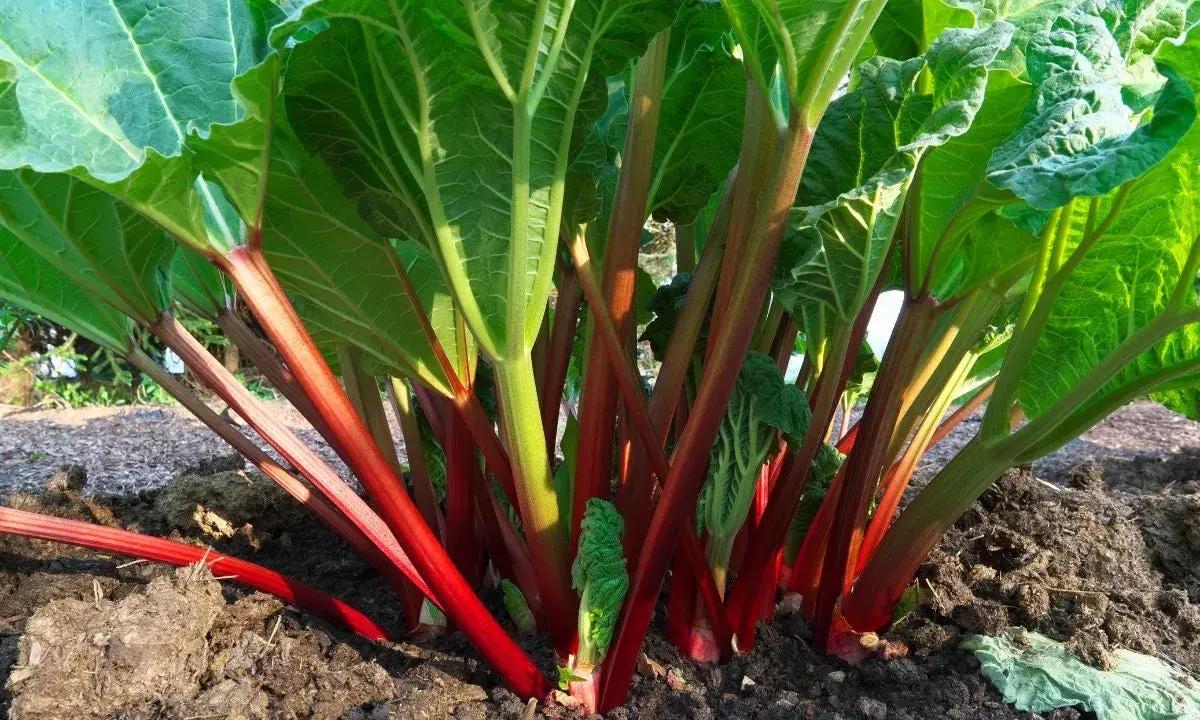
Rhubarb rewards patience, but only if you give it the right start. The question of where to plant rhubarb usually has one practical answer: choose a sunny, well-drained bed that can stay open for the long term. In the sections below, I’ll cover the light, soil, spacing, and site choices that matter most in a U.S. garden.
The best rhubarb site is sunny, open, and easy-draining
- Give rhubarb at least 6 to 8 hours of direct sun in most U.S. gardens.
- Use fertile, well-drained soil with plenty of organic matter.
- Space crowns about 3 feet apart, with rows about 4 feet apart.
- In hotter regions, morning sun with some afternoon shade often works better than full exposure all day.
- Avoid low spots, soggy ground, and places crowded by trees or shrubs.
- Raised beds are often the smartest fix for clay soil or poor drainage.
Choose a spot that can stay rhubarb’s home for years
Rhubarb is not a crop I’d tuck into a temporary corner. It is a long-lived perennial, and once it settles in, you want it to stay put. That means picking a site that will not be shaded out later by a growing tree, swallowed by shrubs, or dug up for another planting plan.
I usually treat rhubarb more like asparagus than like a quick vegetable bed. It needs room, consistency, and a location that will not be constantly disturbed. A patch near the edge of the garden often works well, as long as it still gets strong light and does not sit in runoff from lawn irrigation or a roof edge.
If you are planting in the northern U.S., an open site with good spring exposure is a real advantage. In warmer parts of the country, I would still aim for openness, but I’d also think about where the afternoon heat is most intense. That leads directly into the light question, because rhubarb is picky enough to care about both sun and heat.
Match the sun to your climate
For most American gardens, full sun is the right default. I like to think in terms of 6 to 8 hours of direct sun a day. Less than that and the plant may still survive, but stalks often get thinner and growth slows down. You can end up with a large leaf canopy and disappointing harvests.
That said, rhubarb is not equally happy in every climate. In cooler regions, full sun is usually ideal. In hotter areas, especially where summer afternoons are punishing, a little shade later in the day can help the plant stay productive and reduce stress. I’d rather give rhubarb morning sun and some relief in the afternoon than force it to sit in blazing heat from dawn to dusk.
- Good light gives thicker stalks and stronger spring growth.
- Too little light usually means lanky stems and slower recovery after harvest.
- Too much heat can push the plant toward green, less attractive stalks and more stress.
The practical rule is simple: in cooler zones, keep it as open and sunny as possible; in hotter zones, trade a bit of afternoon exposure for cooler conditions if you need to. Once the light is right, soil structure becomes the next big test.
Drainage and soil structure decide whether the plant thrives
Of all the things that matter, drainage is the one I would not compromise on. Rhubarb likes fertile soil that holds moisture without becoming waterlogged. A loose loam is ideal because it balances drainage, moisture retention, and nutrients better than thin sand or heavy clay.
If your garden soil is sandy, it may dry out too quickly and need more compost to hold water. If it is clay-heavy, the danger is the opposite: the crown can sit in wet soil and rot. In that case, I would seriously consider a raised bed or a thoroughly amended planting area rather than hoping a small planting hole will solve the problem. Rhubarb roots spread enough that local patch fixes usually are not enough.
A slightly acidic to neutral soil is fine, and exact pH is less critical than the overall structure. What matters more is that the bed drains after rain, holds enough moisture for summer growth, and has enough organic matter to keep feeding the plant. Compost is useful here, but it should improve the whole bed, not just the hole where the crown goes.
- Best soil is deep, fertile, and well-drained.
- Best amendments are compost or well-rotted organic matter worked into the bed before planting.
- Worst soil is a low, compacted area that stays wet after rain or snowmelt.
When the soil is right, the plant can build the root system it needs for years of harvests. After that, the next thing to think about is how much room each crown will claim.
Give each crown room to widen
Rhubarb does not stay small. A healthy clump widens year by year, and crowded plants tend to produce smaller stalks and more disease pressure. I usually plan for at least 3 feet between crowns, with about 4 feet between rows if I am planting more than one row. That spacing gives the plant room to mature and keeps air moving around the leaves.
Airflow matters more than many gardeners expect. Good spacing helps leaves dry faster after rain, which lowers disease risk. It also makes harvest easier and keeps the bed from becoming a tug-of-war between rhubarb and neighboring crops. If you plant it too close to shrubs, trees, or the root zone of larger perennials, competition for water and nutrients will show up sooner than you think.
My practical rule is this: if another plant will eventually lean on rhubarb, shade it, or crowd its crown, it is probably the wrong neighbor. Rhubarb needs elbow room from the beginning, not after it has already become a big clump.
Once spacing is clear, the last useful step is comparing the actual planting spots you might use.
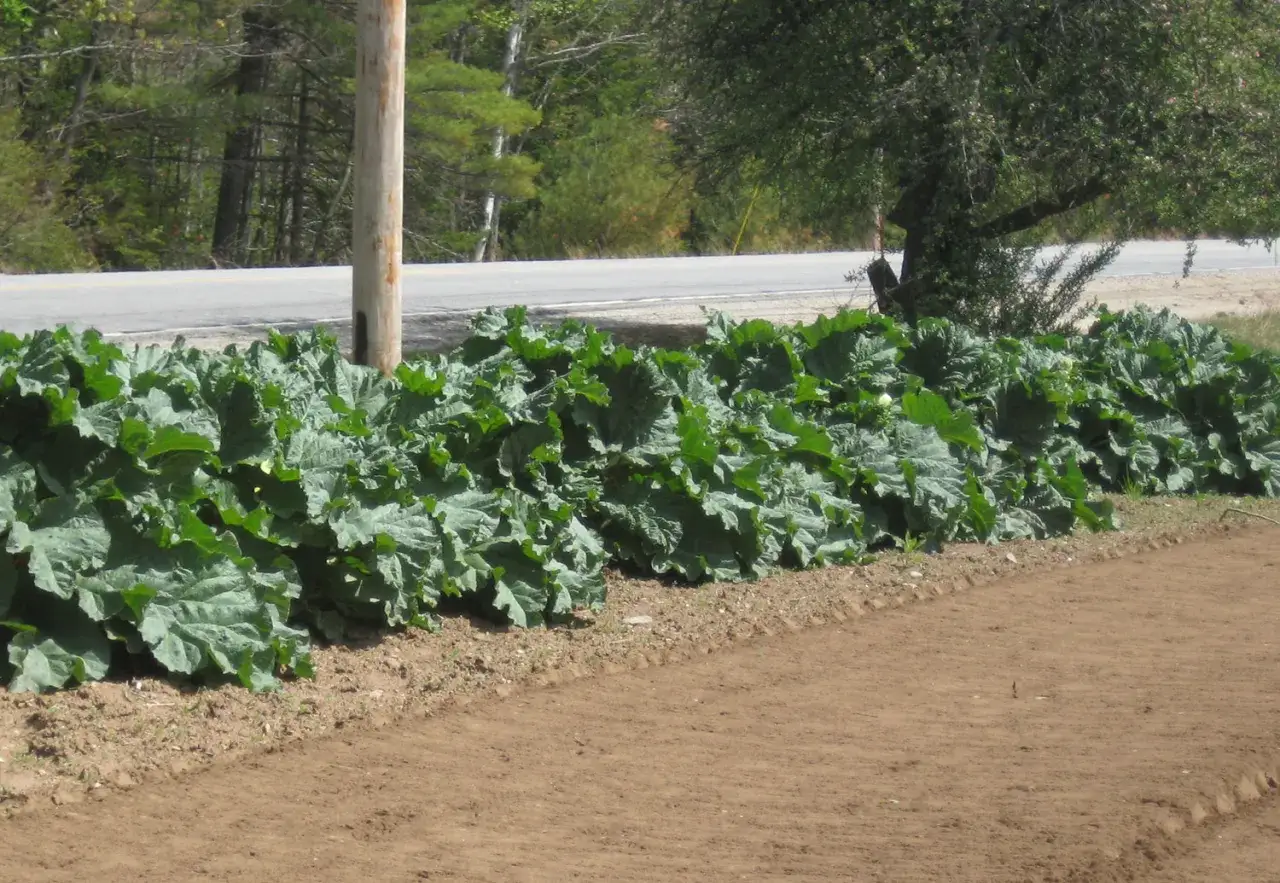
Compare the planting spots that work best
Not every yard gives you the same kind of bed, so I like to compare the realistic options before planting. Some sites are naturally better, while others can work only if you correct a problem first.
| Site type | When it works | My take |
|---|---|---|
| Open in-ground bed | Soil drains well, sun is strong, and the spot stays undisturbed | This is the best all-around choice for most gardens |
| Raised bed | Clay soil, slow drainage, or a yard that holds too much water | This is my go-to when the native soil is too wet or heavy |
| Large container | Space is limited and you can water consistently | Possible, but less forgiving and not my first choice for a long-lived crop |
| Gentle south-facing slope | You garden in a cooler region and want earlier spring warming | Excellent if the slope still drains well and stays open to sun |
For most home gardeners, the decision comes down to this: if the soil is already good, use it; if the soil is stubborn, raise it. A raised bed will not fix poor light, but it can make a major difference in clay or wet ground. From there, it becomes easier to rule out the spots that will keep causing trouble.
Skip the spots that fail rhubarb most often
Rhubarb has a fairly short list of bad places, but those bad places are common. I would avoid any site that checks two or more of these boxes:
- Low ground where water pools after rain or snowmelt.
- A shaded strip beside a fence, garage, or north wall.
- An area under trees or near large shrubs with aggressive roots.
- A bed that gets blasted by constant overhead irrigation.
- A patch you plan to rework every season for annual crops.
Low spots are especially risky because standing water invites crown and root problems. Heavy shade causes slow, weak growth. Tree roots do not just steal moisture; they also make it harder for rhubarb to build the kind of root reserve that supports strong spring harvests. And once a crown is unhappy in the wrong spot, moving it is usually a better solution than trying to nurse it along.
When I see a patch that is too wet, too shady, or too crowded, I do not look for a miracle fix first. I look for a better site. That is often the cheapest and most durable decision you can make.
A rhubarb bed that keeps producing for years
The best planting site is the one that matches rhubarb’s long-term habits: bright light, rich soil, steady moisture, and room to expand. If you can give it that combination, the plant will do much less fighting and much more growing. That is the real payoff of getting the location right.
After planting, keep weeds down, water deeply when the weather turns dry, and do not harvest hard in the first year or two. If the crown begins to crowd itself after several seasons, divide it and reset it in fresh soil. Those maintenance steps matter, but they only work well when the original site was chosen with care.
My short version is this: pick the sunniest well-drained spot you can offer, protect it from future shade, and give each crown enough space to become a full-sized clump. Do that, and the patch will usually repay you for a long time.