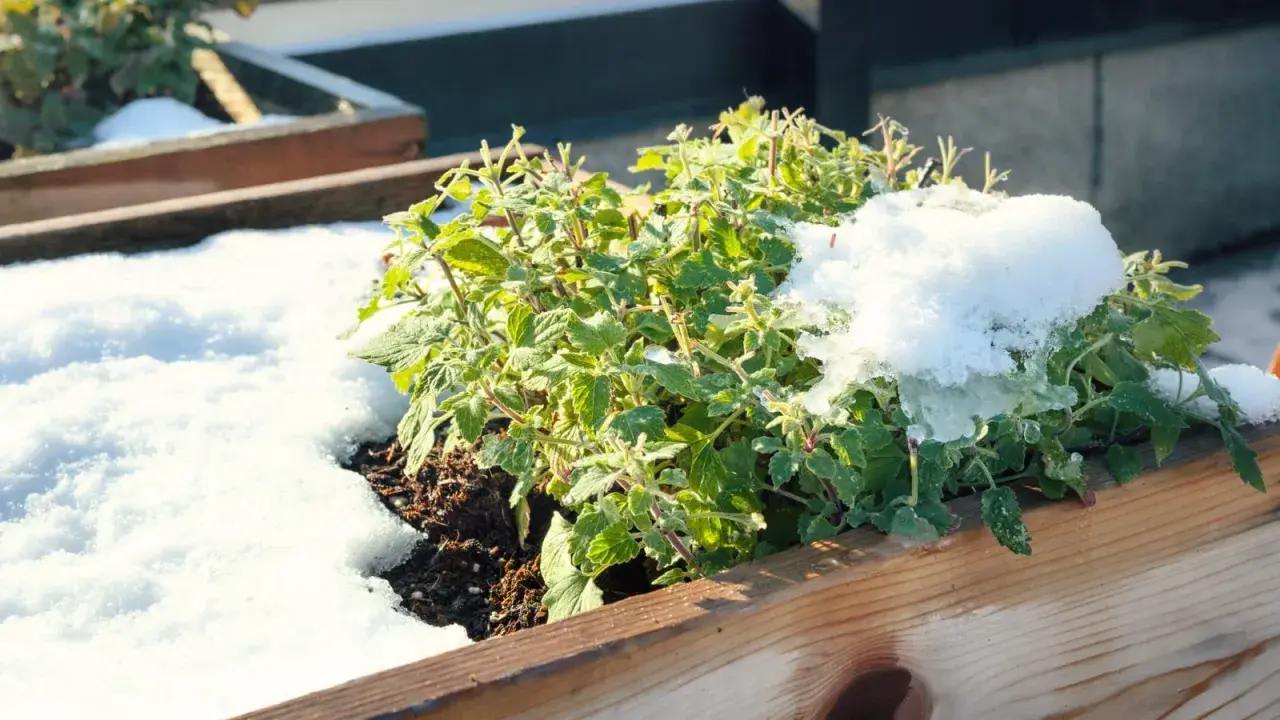
Can mint survive winter? In most U.S. gardens, yes, especially if the roots stay protected and the soil does not sit wet and frozen for long. The top growth often dies back, but the plant itself usually rebounds from the crown and rhizomes when spring returns. In this article, I break down what actually determines survival, which mint types are toughest, and how I overwinter plants in the ground or in pots.
Mint survives winter best when roots stay dry, insulated, and undisturbed
- Common mints are hardy perennial herbs, so winter dieback does not automatically mean the plant is dead.
- In the ground, mint usually survives cold by regrowing from underground stems and roots.
- Containers are the weak point because roots freeze faster than they do in open soil.
- A loose 2 to 5 inch mulch layer helps stabilize temperature and reduce winter damage.
- If you want fresh leaves in winter, move potted mint to bright light and keep it only lightly moist.
Mint survives winter by protecting the roots, not the leaves
I usually think of mint as one of the most forgiving edible herbs, but winter changes the rules a bit. The leaves may blacken or disappear after a hard freeze, yet the plant often stays alive underground and restarts when temperatures rise. That is why winter survival is less about keeping mint green and more about keeping the crown and roots healthy.
USU Extension pegs mint as generally hardy to around -20°F, and Illinois Extension describes mints as extremely hardy perennials. In practical terms, that means the common kitchen mints are built to handle real cold, but they still need the right site. Good drainage matters almost as much as temperature, because a cold, soggy planting bed is far riskier than a dry one.
The part most gardeners miss is that winter damage is often indirect. Dry wind, freeze-thaw swings, and waterlogged soil can hurt mint more than the cold itself. That is why I look at the whole site before I worry about the thermometer, and that leads directly to the question of which mint types are most reliable outdoors.
Which mint varieties are the safest bets outdoors
If I want winter reliability, I start with the common culinary mints. Peppermint and spearmint are usually the safest choices for U.S. gardens because they are built for cold conditions and bounce back well after dieback. Novelty mints can be useful too, but I treat them with a little more caution until I know how they behave in my climate.
| Mint type | Winter behavior | Best use |
|---|---|---|
| Peppermint | Usually among the toughest mints and one of the most dependable after a hard freeze | Cold-climate gardens and low-maintenance herb beds |
| Spearmint | Very hardy and quick to return from the roots | Most home gardens, especially where you want a classic cooking mint |
| Specialty or flavored mints | Hardiness can vary more from cultivar to cultivar | Sheltered beds, test spots, or containers you can move if needed |
When I want mint for tea, sauces, or general kitchen use, I do not overcomplicate the choice. Peppermint and spearmint give me the best odds of seeing fresh spring growth without fuss. Once the plant is in the ground, the next question is how to prepare it before the first serious freeze arrives.
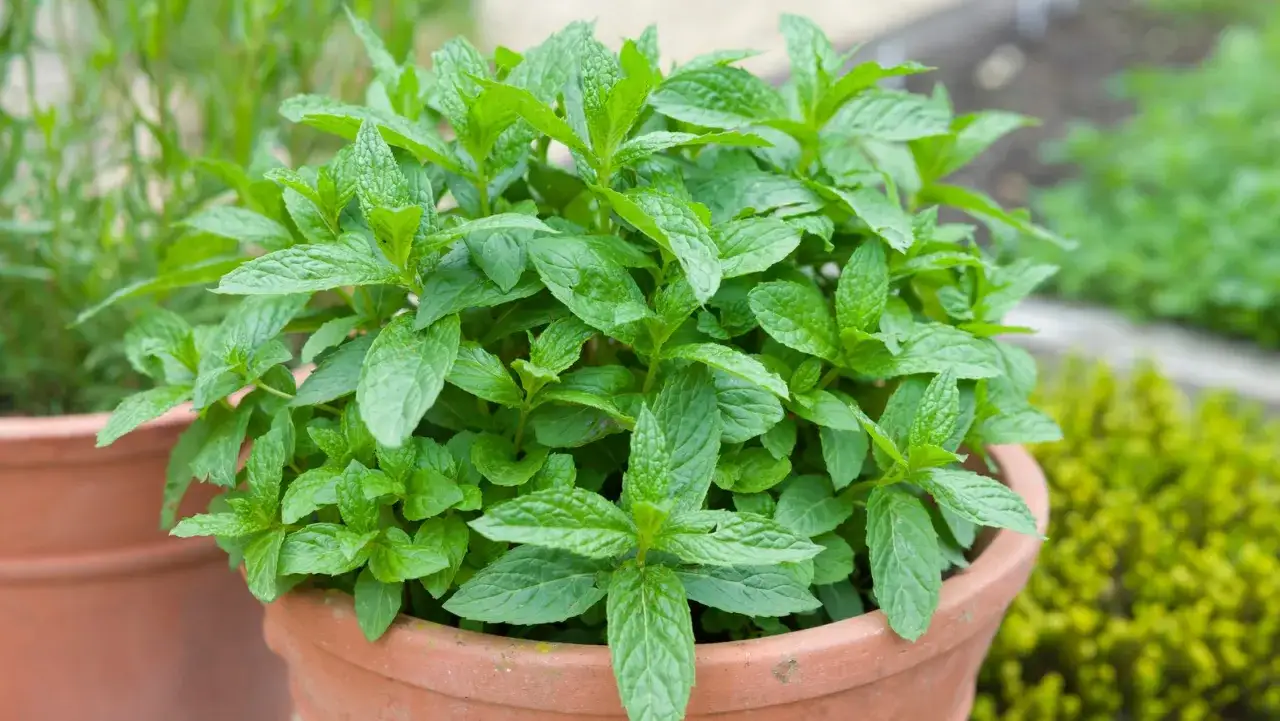
How to overwinter mint in the ground
In the ground, mint is at its best because soil buffers temperature swings better than a pot ever can. I usually let the plant keep growing until frost knocks the foliage back, then I cut the stems down to a few inches above the soil. That keeps dead top growth from matting over the crown and makes spring cleanup easier.
- Wait for a hard frost before cutting back aggressively if the plant is still producing useful leaves.
- After the ground freezes, add a loose 2 to 5 inch layer of mulch such as leaves, straw, or compost.
- Keep the mulch loose enough that the crown can breathe and does not stay wet and compressed.
- Avoid late-season fertilizer, which can push tender growth right before winter.
- Leave the plant alone once mulched; repeated digging or disturbing the crown usually does more harm than good.
I prefer to mulch after the soil has cooled and frozen because that helps prevent premature growth during a warm spell. A well-mulched mint bed can look rough above ground and still come back strongly in spring. If the plant is in a container, though, I would not trust the same approach without extra protection, because pots behave very differently from open soil.
What to do with mint in pots
Container mint is the version that most often surprises people in winter. The roots are exposed to colder air on all sides, so the pot can freeze solid long before the same plant would struggle in the ground. If I am keeping mint in a pot through winter, I assume I need to give it some help.
| Winter strategy | Best for | Main tradeoff |
|---|---|---|
| Leave the pot outside in a sheltered spot | Mild winters and locations with reliable snow cover | The pot can still freeze hard during dry cold snaps |
| Sink the pot into the ground | Gardeners who want to control spread while improving insulation | Requires space and a bit of digging |
| Move it to an unheated garage or shed | Cold regions where outdoor wind is the bigger problem | Soil moisture has to be checked occasionally |
| Bring it indoors under bright light | People who want winter harvests | Weak light leads to leggy growth and pest problems |
When I move mint indoors, I keep it cool, bright, and only lightly moist. Warm rooms are often the fastest way to get weak stems and miserable-looking leaves. If the goal is just survival, I would rather give mint a chilly, sheltered rest than force it to behave like a houseplant. The next step is learning how to tell whether a plant is truly dead or just resting.
How to tell whether mint survived or just went dormant
Mint can look ugly in late winter and still be perfectly alive. Brown stems do not mean failure, and a bare patch above the soil is not proof that the roots are gone. I always check the crown first, because that is where the plant usually regrows from.
One simple test is the scratch test. Gently scrape a bit of stem or crown with a fingernail or knife; green tissue underneath usually means the plant is still alive. I also look for firm, not mushy, roots and for early shoots at the base once the weather starts to warm. If the roots smell rotten or the soil stayed waterlogged all winter, the odds drop fast.
I avoid replacing mint too early. In colder parts of the U.S., a healthy plant can stay quiet until the soil warms well into spring, and impatient gardeners sometimes dig up a plant that would have recovered on its own. That patience pays off, especially because the final decision is often more about your climate zone than the calendar.
The simple winter plan I trust in U.S. gardens
My rule is straightforward. In USDA zones 3 to 5, I plant mint in the ground if I can and protect it with mulch after freeze-up. In zones 6 to 7, mint is usually easy outdoors, but I still treat containers as a separate project that needs shelter. In zones 8 to 10, winter is rarely the real challenge; summer heat, watering, and drainage usually matter more than cold.
If I wanted one reliable edible herb for cold weather, mint would be near the top of the list. Give it decent drainage, let it die back naturally, mulch after frost, and do not overthink the top growth when the plant is resting. That is usually enough to carry mint through winter and back into the kind of fresh spring growth you want for tea, cooking, and daily harvesting.