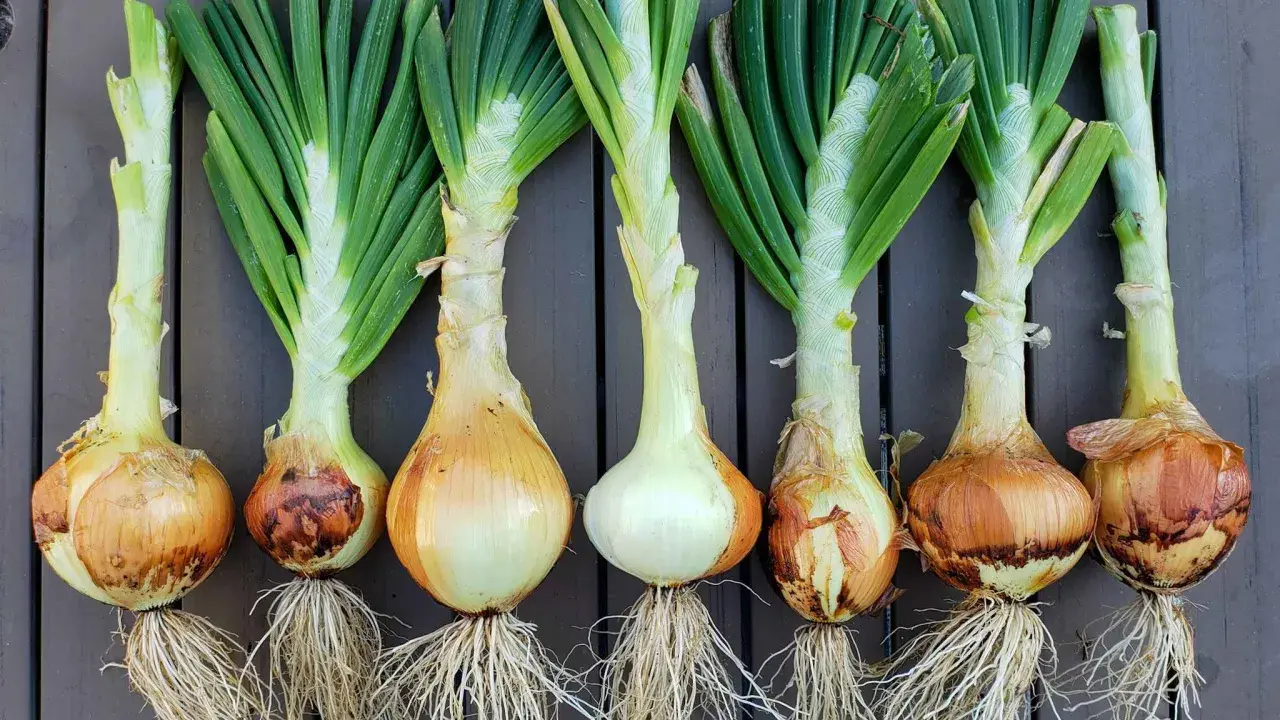
Onions in Zone 7 are a timing crop as much as a soil crop. Get the window right and they size up cleanly; miss it, and you get small bulbs, premature flowering, or a harvest that stalls before summer heat arrives. In this guide, I cover the planting window, the onion types that actually fit Zone 7, and the practical steps that keep the crop moving toward full bulbs.
Zone 7 onions succeed when the planting date, variety, and method all line up
- Most bulb onions in Zone 7 go in late winter to early spring, usually as soon as the soil can be worked and about 4 to 6 weeks before the last expected frost.
- Intermediate-day onions are the safest default for many Zone 7 gardens, while the northern edge of the zone can also handle long-day types and the southern edge may favor short-day or overwintering varieties.
- Seeds, sets, and transplants do not follow the same calendar, so the method you choose changes the planting date.
- Full sun, loose fertile soil, and steady moisture matter more than most people expect, because onions have shallow roots and hate stress.
- Harvest when about half the tops fall over, then cure bulbs in a dry, airy place before storing them.
The best planting window in Zone 7
Zone 7 gives you a useful clue about winter hardiness, but it does not give you the exact onion date on its own. For bulb onions, I think in terms of soil readiness, local frost timing, and day length, not the calendar alone. In a typical Zone 7 garden, the safest spring window is usually late February through March, but the real trigger is simpler: plant when the soil can be worked and the young plants will not sit in cold, soggy ground for long.
That is why transplants and sets are often planted about 4 to 6 weeks before the last frost, while direct-seeded onions can go in as soon as the bed is workable. Onions tolerate light frost, but planting too early can backfire if a cold spell lingers after growth starts. That stress is one of the easiest ways to encourage bolting, which is the plant sending up a flower stalk instead of sizing up a bulb. There is one important exception. In the warmer part of Zone 7, some short-day or overwintering onions can be planted in fall, then carried through winter for an earlier spring harvest. That only works if the cultivar is suited to it. Before you set a date, decide which onion type belongs in that bed, because daylight length changes the whole game.Choose the onion type that fits your daylight
Onions are not chosen by hardiness zone alone. They are chosen by the number of daylight hours that trigger bulbing, and that matters a lot in Zone 7 because the zone stretches across a wide range of latitudes. My rule is simple: match the onion to the daylight pattern first, then choose the planting date.
| Onion type | Day length that triggers bulbing | Best fit in Zone 7 | What I would expect |
|---|---|---|---|
| Short-day | About 10 to 12 hours | Best for the southern edge of Zone 7 and for fall planting in milder areas | Earlier bulbing, usually sweeter bulbs, but they can stay small if the variety is pushed too far north |
| Intermediate-day | About 12 to 14 hours | The safest all-around choice for many Zone 7 gardens | Reliable bulb size with less risk of mismatching day length |
| Long-day | About 14 to 16 hours | Best for the northern edge of Zone 7, where springs stay cool a little longer | Good bulb size and often better storage life, but not the best fit for warmer southern gardens |
If I were buying onions for an average Zone 7 garden and wanted the fewest surprises, I would start with intermediate-day types. They are the most forgiving middle ground. If your garden sits nearer the cooler, northern side of the zone, long-day onions can also perform well. In the warmer southern end, short-day onions or overwintered types deserve a closer look. Once the variety is matched to your latitude, the next question is whether to start from seed, sets, or transplants.
Seeds, sets, or transplants each change the calendar
Not all onion starts are equal, and that matters when you are trying to time the crop correctly. Seeds give you the widest variety choice, transplants save time, and sets are the fastest route to something in the ground. The tradeoff is that the easiest option is not always the best one for big storage bulbs.
| Method | When to plant in Zone 7 | Best use | Tradeoff |
|---|---|---|---|
| Seeds started indoors | Start 10 to 12 weeks before outdoor planting | Best variety selection and strong, young plants | Needs early planning, light, and patience |
| Direct seeding | As soon as the soil is workable in spring | Simple and inexpensive | Slowest route to bulbs and easiest to lose to weeds or weather swings |
| Transplants | When soil is workable and daytime temperatures are near 50 F | Most reliable for home gardeners who want bulb onions | Less variety than seeds, and plants must be hardened off |
| Sets | As soon as the soil can be worked in spring | Fastest planting option and useful for green onions | Large sets can bolt more easily, so small sets are better for dry bulbs |
I usually steer gardeners toward transplants if they want dependable bulb onions in Zone 7. Seeds are excellent if you can start them early enough indoors, but they ask for more attention. Sets are convenient, yet they are also the option most likely to disappoint if the sets are too large or if spring turns cold again after planting. Small sets are the safer choice for storage bulbs, while larger sets are better used for green onions. Once the crop is in the ground, the real work shifts from timing to management.
How to plant for straight, sizable bulbs
Onions reward clean soil and simple discipline. They do not need fancy treatment, but they do need consistency. I plant them in full sun, in loose soil that drains well, and I avoid beds that stay wet after rain. A soil pH around 6.0 to 6.8 is a strong target, and compost or aged organic matter helps keep the bed open enough for the bulbs to expand.
- Prepare a smooth bed before planting so the small roots are not fighting clods or stones.
- Set transplants or sets about 1 to 2 inches deep, with the roots spread out and the growing point just below the surface.
- Space plants roughly 3 to 4 inches apart for moderate bulbs, or wider if you want larger bulbs.
- Keep rows about 12 to 18 inches apart so you can weed and water without bruising the plants.
- Water in well and keep the soil evenly moist, not soggy.
- Feed lightly with nitrogen early on, then stop pushing growth once bulbing begins.
The two mistakes I see most often are crowding and planting too deep. Crowded onions may look fine early in the season, but they compete for light, water, and nutrients right when bulb size is being decided. Planting too deep slows them down and can produce awkward, narrow necks. If you want better bulbs, make the bed easy for the plant to do its job. From there, the main challenge is keeping stress low while spring weather keeps changing.
Keep the crop on schedule through spring weather swings
Zone 7 spring weather can be generous one week and irritating the next. That is exactly why onions need steady care. Their roots stay near the surface, so they cannot recover well from drought or hard competition with weeds. I aim for about 1 inch of water a week, more if the soil drains quickly or the weather turns windy and dry.Weed control matters more than most people think. Onions dislike competition, especially early in the season, and the bed should stay clean without deep hoeing that can damage bulbs. A light mulch can help, as long as it does not smother the young plants. I also like to side-dress with nitrogen while the tops are building, then back off once bulb enlargement starts. At that point, more leaf growth is no longer the goal.
Cold snaps are the other problem. If onions are exposed to prolonged cool weather after they have started active growth, they can interpret that as a signal to flower. That is why oversized sets and very early planting are risky. If a plant does bolt, I harvest it quickly and use it fresh, because it will not store well. The crop is telling you the season is nearly finished, which leads straight to harvest timing.
Know exactly when to harvest and how to cure bulbs
Onions are ready when the tops begin to yellow and fall over naturally, usually when about half the crop has collapsed. In Zone 7, spring-planted onions often land in late June through July, though some varieties may run later into early August. I do not rush this stage, but I also do not wait so long that wet weather starts to bruise the bulbs in the ground.
After lifting, curing is the step that determines whether the crop stores well or turns soft too soon. Lay the bulbs in a dry, airy, shaded place with good movement around them. In warm, dry weather, curing can take 7 to 14 days. In less ideal conditions, it may take closer to 2 to 4 weeks. The necks should dry down, the outer skins should become papery, and the bulbs should feel firm before you trim and store them.
Storage quality depends partly on the variety. Sweeter onions are often less durable in storage, while stronger-flavored types usually keep longer. If your goal is winter storage, I would choose a variety bred for that purpose rather than expecting every onion to behave the same way. With that in mind, it helps to turn the whole season into a simple Zone 7 plan you can repeat.
The zone 7 onion plan I would trust in a real garden
If I were planting onions in a typical Zone 7 garden, I would keep the plan tight. I would pick a variety group that matches the daylight pattern, start seeds indoors 10 to 12 weeks before transplanting if I wanted the best selection, and set plants out only when the soil is workable and daytime temperatures are around 50 F. If I wanted the easiest route, I would choose transplants instead of sets, then keep the bed evenly watered, weeded, and lightly fed until bulbing starts.
The short version is this: spring is the default answer for bulb onions in Zone 7, fall planting is the exception, and variety choice decides which of those two paths makes sense. Get those three decisions right, and the rest of the season becomes much easier to manage. A little restraint at planting time usually pays back with larger, better-cured bulbs at harvest.