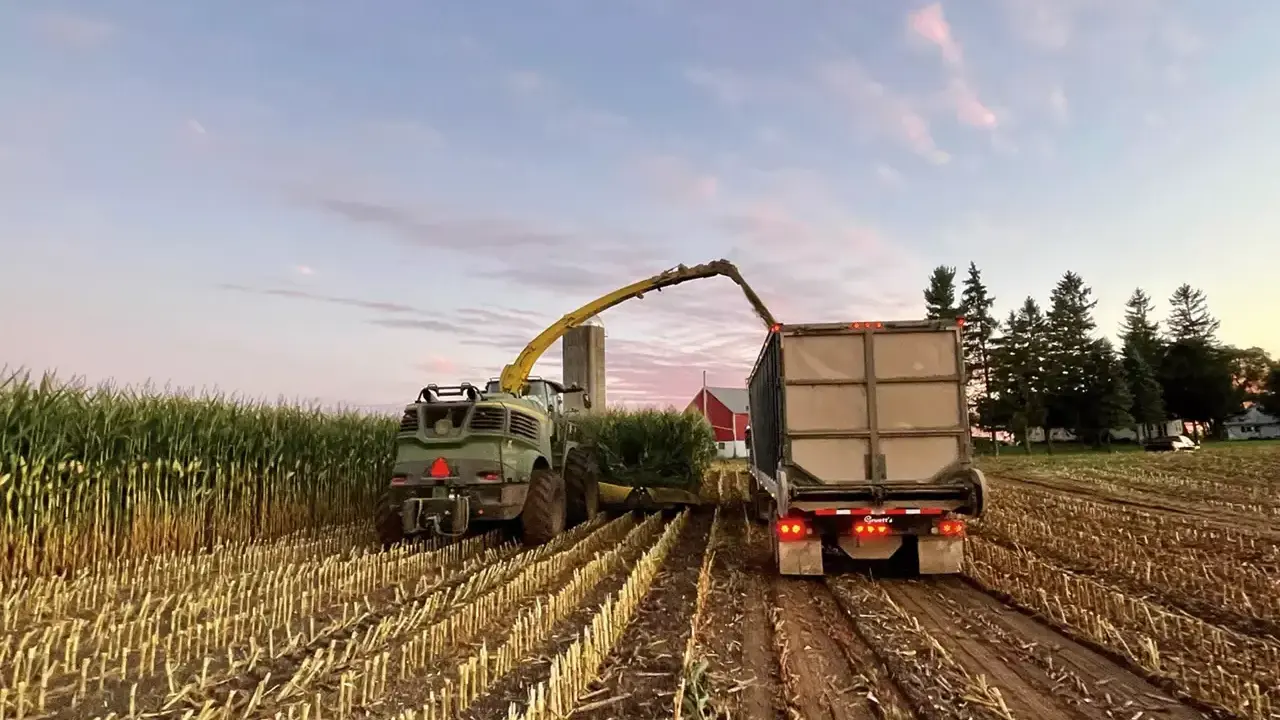
The decision comes down to digestible fiber, yield, and ration fit
- Brown midrib genetics lower lignin, which usually improves fiber digestibility and intake.
- The biggest payoff is usually in high-producing dairy rations, not in every livestock class.
- Yield and standability can slip, so the tonnage math matters as much as feed quality.
- Harvest timing, chop length, packing, and sealing still decide whether the forage performs well.
- Seed availability can be tighter in some U.S. markets, so plan ahead before you commit acres.
What brown midrib genetics change inside the plant
The brown midrib trait changes the cell wall. That sounds abstract until you look at what it means in the bunk: less lignin, easier fiber breakdown, and usually better rumen passage. Lignin is the stubborn part of the stalk and leaf that cattle cannot digest, so when it drops, more of the cellulose and hemicellulose becomes available to the animal.
That is the core reason this forage gets attention. In normal corn silage, neutral detergent fiber often runs roughly 36% to 50%, acid detergent fiber about 18% to 26%, and lignin about 2% to 4%. The brown midrib trait pushes the plant toward better fiber access, which can raise intake and support more milk or gain when the ration is fiber-limited.
I would not overstate it, though. The grain side of the plant still matters, kernel processing still matters, and a good hybrid still has to stand in the field long enough to be harvested cleanly. That balance between biology and field performance is what makes the next question more important than the genetics alone: where does this forage actually fit?
Where it fits best in U.S. rations
The strongest case is usually a high-producing dairy herd. When cows are eating well but fiber digestibility is limiting intake, a more digestible silage can help the ration work harder without forcing as much purchased energy into the mix. That is why the trait has stayed relevant for dairies that want milk per acre, not just tons per acre.
I would also consider it when forage inventories are tight and the ration needs a homegrown forage with more digestible fiber than a standard silage hybrid provides. In that setting, the question is not whether the plant looks impressive in the field. The question is whether it helps you replace bought-in nutrients more efficiently.
It is less compelling for dry cows, heifers, or beef classes that do not need the same level of intake drive. In those cases, a strong conventional silage hybrid can be the more practical choice because it brings simpler agronomy and more predictable yield. The University of Minnesota Extension has also noted that some BMR seed offerings have been phased out, so availability can be tighter than many growers expect.
That is why I separate "good forage" from "right forage." The next comparison shows why the gap is not just about chemistry.
BMR corn silage compared with conventional silage in practice
| Factor | BMR silage | Conventional silage |
|---|---|---|
| Fiber digestibility | Usually higher because lignin is lower | Usually solid, but typically less digestible |
| Intake potential | Often better, especially in high-producing cows | Good, but less likely to drive intake as hard |
| Yield stability | Can be lower or more variable | Often higher and more predictable |
| Standability | Sometimes weaker, so lodging risk needs attention | Usually a little more forgiving |
| Best use | Rations where digestible fiber has real value | Broad-acre silage production and yield-focused plans |
The practical takeaway is simple: I do not buy BMR for the headline. I buy it only if the ration can use the extra digestibility well enough to offset any yield or management penalty. A modest drop in tonnage can be acceptable if cows respond clearly; a large yield hit usually wipes out the advantage.
How to harvest and store it without losing the advantage
Harvest management matters just as much here as it does with any other corn silage, and maybe more because the value of the crop is tied so heavily to preserving digestibility. I would still target the normal whole-plant dry matter window for the storage structure: roughly 30% to 35% DM for bunkers, 32% to 38% for many upright systems, and around 32% to 40% for bags. Chop too wet and you risk seepage and souring. Chop too dry and packing gets harder, oxygen stays in the pile, and mold losses rise.
After that, I focus on the pieces that protect feedout quality:
- Set chop length so the material packs well without turning into dust.
- Check kernel processing rather than assuming the processor is doing its job.
- Pack aggressively and seal quickly to limit oxygen infiltration.
- Watch the face carefully during feedout so the top-quality forage does not become spoilage.
That part sounds routine, but it is where a lot of the benefit disappears. A highly digestible crop stored badly can end up feeding like ordinary silage, which leads straight into the economics question.
How I would judge the economics before planting
The first mistake is comparing seed cost to seed cost. That is too narrow. I would compare expected feed value per acre, not just the bag price, and I would do it with a realistic view of yield, standability, and ration response. If a hybrid gives up too much tonnage, the added digestibility will not rescue it.
My decision process is usually straightforward:
- Estimate how much high-quality forage the farm actually needs.
- Compare the expected yield of the BMR hybrid against a strong conventional silage hybrid.
- Ask whether the ration is likely to be fiber-limited or already comfortable on digestibility.
- Check whether the farm can harvest on time and store the crop well.
- Run the numbers on milk per acre, not only tons of dry matter per acre.
If the farm is already short on highly digestible forage, the economics can work even with a seed premium. If the ration is not fiber-limited, or if the field is a chronic lodging risk, I would be cautious. Wisconsin Corn Agronomy even provides a BMR milk-versus-yield decision aid, which matches the way I think about it: the right metric is the value of the forage, not the romance of the trait.
Where the crop can disappoint if you push it too hard
BMR is not a free upgrade. The common failure points are predictable, and I think that is why some growers are disappointed after a good year and then forget how much management it took to get there. Weak stalks, lodging, delayed maturity, and uneven field performance can all chip away at the expected advantage.
Disease pressure is another one. If stalk health breaks down, the forage quality edge can narrow faster than many people expect, and a premium hybrid will not rescue a poor field. In my view, that means BMR belongs on fields where you can manage disease, fertility, and harvest timing with discipline rather than hope.
There is also a ration-level trap. If you feed it to animals that do not need highly digestible forage, you may pay for quality you never fully use. That is why I look at the whole system: crop, storage, and animal class. When those three line up, the trait makes sense; when one of them is weak, the margin disappears quickly.
The most practical way to decide if it belongs in your rotation
Here is the rule I would use if I were deciding on a U.S. farm in 2026: choose BMR only when the ration can clearly use more digestible fiber, the field can tolerate a little more risk, and your harvest window is tight enough that the crop will be preserved at its best. If any of those three pieces are missing, a well-managed conventional silage hybrid is often the safer bet.
That is the part people sometimes miss. This trait is not really about growing a different crop so much as making a different tradeoff. It gives you a better forage when the cow can use it, but it asks for more attention in the field and more honesty in the ration room. If you treat it that way, it can be a strong tool. If you treat it like a guaranteed yield winner, it usually disappoints.
For most farms, the best next step is simple: compare one BMR option against one proven silage hybrid on the same soil type, then judge the result by forage quality, standability, and milk or gain per acre rather than by eye alone.