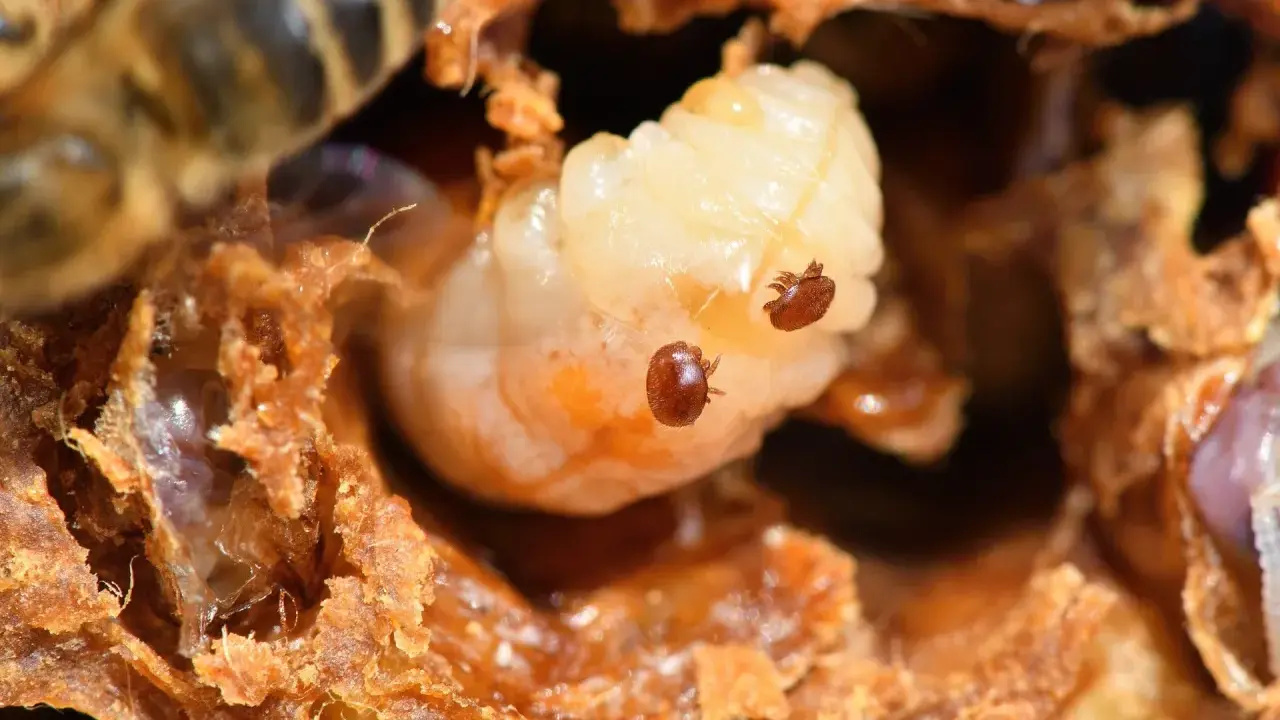
Varroa management is a timing problem long before it is a product problem. The practical answer to when is it too late to treat for varroa mites depends on brood timing, colony strength, and the treatment window you still have left. In most U.S. apiaries, the best chance comes before late summer slips into fall, because once winter bees have already been raised under heavy mite pressure, treatment can lower the load but not fully undo the damage that has already been done.
The window closes before winter bees are damaged
- Late summer is the decisive period because that is when winter bees are being produced.
- Brood present means you need a treatment that can work around capped cells, not just on adult bees.
- Broodless colonies open the door to late-fall cleanup options that are much more effective.
- Visible virus damage usually means mites have been winning for weeks already.
- Sampling beats guessing; an alcohol wash tells you whether action is urgent.
The season matters more than the calendar
I look at varroa timing in three layers: what the colony is building, what the weather still allows, and what the treatment can actually reach. That is why the same hive can be easy to help in July and hard to save in October. In much of the northern U.S., the high-value window is already closing by mid-August, while warmer regions often buy a little more time.
The point is not that treatment stops working after a certain date. The point is that the bees you most want to protect, the winter bees, are being raised before cold weather forces the colony into survival mode. If those bees develop while mites are feeding in the brood nest, you are treating for next year as much as for this one.
| Season | What is happening in the colony | Best-fit treatment goal | Why waiting becomes risky |
|---|---|---|---|
| Mid-summer after honey harvest | The brood nest is active and mites are reproducing quickly | Knock mites down before winter bees are produced | Every week of delay lets more damaged bees emerge |
| Late summer | Winter bees are being raised | Use a treatment that still works with brood present | Once those bees are exposed, the colony may never fully recover |
| Late fall | Brood is minimal or absent in many colonies | Use a broodless cleanup treatment | The options narrow fast if cold weather and cluster size limit application |
That seasonal rhythm is the backbone of varroa control. The next question is whether the colony is still inside one of those windows, or whether you are already in damage-control territory.
How I decide whether a colony still has time
I do not trust eye tests alone. A hive can look busy and still be carrying a mite load that will shorten the lives of the bees you need most. The cleanest way to answer the timing question is to sample, then let the numbers tell you how urgent the problem is.
An alcohol wash is the most reliable field check because it removes mites from a known bee sample. A half-cup sample of roughly 300 to 400 bees is common, and a practical seasonal alarm bell in the U.S. is around 3 mites per 100 bees. If a colony is over that threshold in the main season, I treat the situation as urgent rather than convenient.
- Brood still present: choose a treatment that can reach mites in or around capped cells.
- Little or no brood: late-fall cleanup options become much more useful.
- Temperatures still workable: some treatments are sensitive to heat or cold, so the forecast matters.
- Colony strength is adequate: a very weak colony may need combining instead of another round of treatment.
- You have enough days left: some products need time to complete the full treatment cycle before winter closes in.
If the count is high in July or early August, you still have a meaningful chance to protect winter bees. If the count is high in late autumn and the colony is already shrinking, you may still reduce mites, but you should stop expecting the hive to bounce back on treatment alone. That leads directly to the next decision: which treatment still fits the colony you actually have.
Late-season treatment choices and the limits of each one
Not every varroa product solves the same problem. The right choice depends on whether brood is still present, how much time you have left, and whether the colony is strong enough to handle the treatment. I would rather use the right chemistry late than the wrong chemistry early.
| Treatment type | Best timing | What it does well | Main limitation |
|---|---|---|---|
| Formic acid | Late summer when brood is present | Can reach mites associated with capped brood | It is temperature sensitive and can stress weak colonies |
| Thymol-based options | Late summer to early fall | Useful when brood is still present and temperatures are suitable | Slower than a flash treatment and needs the full course |
| Oxalic acid | Late fall or winter when brood is little to none | Excellent cleanup when mites are exposed on adult bees | Much less effective against mites hiding under capped brood |
| Longer-acting synthetic strips | When enough season remains for the full label interval | Helpful when brood is present and you still have time left | Too slow if winter is near or the colony is already on the edge |
The main mistake I see is people choosing a product first and a timing window second. That reverses the logic. The colony’s brood status, the temperature, and the time left before winter matter more than brand loyalty or habit.
Why waiting until the bees look weak is usually too late
By the time a colony shows deformed wings, crawling bees, spotty brood, or a population that has thinned faster than it should, varroa has usually been working in the background for a while. Those are not early warnings. They are signs that the cost has already been paid by the bees you wanted to carry the colony through winter.
I think of this as the difference between prevention and salvage. Prevention protects the next generation of bees. Salvage tries to reduce pressure on a colony that has already absorbed the damage. The second approach can still make sense, but it is not the same thing as a clean rescue.
- Virus symptoms matter because mites do not act alone; they amplify disease pressure.
- A thin population is a serious warning because winter survival depends on healthy young bees, not just surviving adults.
- Late fall collapse is often a timing failure, not a sudden mystery.
- One late treatment may still help, but it usually cannot rebuild what the colony already lost.
That is why I do not like the phrase “too late” unless I define what success still means. If the goal is to save this year’s winter cluster, there is a cutoff. If the goal is to reduce mite pressure for the next season, even a late intervention can still have value. The practical response depends on how far past the ideal window you really are.
What to do when you missed the ideal window
When the ideal treatment window is gone, the job changes from optimization to triage. I still act, but I act differently. The goal is to give the colony the best possible odds without wasting time or money on a treatment that cannot fit the biology anymore.
- Sample immediately so you know whether the colony still has a manageable mite load or needs emergency action.
- Match the product to brood and temperature; if brood is still present, choose a brood-compatible option, and if brood is gone, use a broodless cleanup treatment.
- Treat the whole apiary if multiple colonies are sharing space, because mites move between hives through drifting and robbing.
- Recheck after treatment so you know whether the mites actually dropped to a safer level.
- Feed and reduce stress if the colony is entering fall light on stores, because a starving colony will not benefit from clever timing.
- Combine weak colonies when necessary rather than forcing an underpowered hive to limp through winter alone.
This is also the point where I become realistic about economics. If a colony is already too weak to cover brood, too late in the season to recover, and too infested to justify another expensive intervention, combining may be the smarter farming decision. The next step is keeping that situation from repeating.
The best insurance is a yard-wide routine before the window closes
The safest varroa program is not built around panic treatment in October. It is built around regular sampling, timely late-summer action, and one clean follow-up check after treatment. That routine gives you a chance to act while brood is still manageable and before winter bees carry the full burden of the infestation.
- Sample colonies on a regular schedule from spring through fall.
- Treat based on mite counts, not on the assumption that a hive “looks fine.”
- Plan the late-summer intervention first, then decide whether a fall cleanup is still needed.
- Check the whole apiary, not only the weakest colony, because one bad hive can seed the rest.
If you are still asking when is it too late to treat for varroa mites, the honest line is this: once winter bees are already raised under heavy mite pressure, the colony may still be treated, but the chance to fully save that season is mostly gone. The better move is to sample early, act while brood is still manageable, and keep the apiary ahead of varroa before the bees have to face winter with damaged bodies and a shortened life span.
